
The short answer
Use both, and be clear about which does what. Portals are where many buyers begin, because they can search a whole area at once. Your own website is where a buyer goes when one development has caught their eye and they want the full picture.
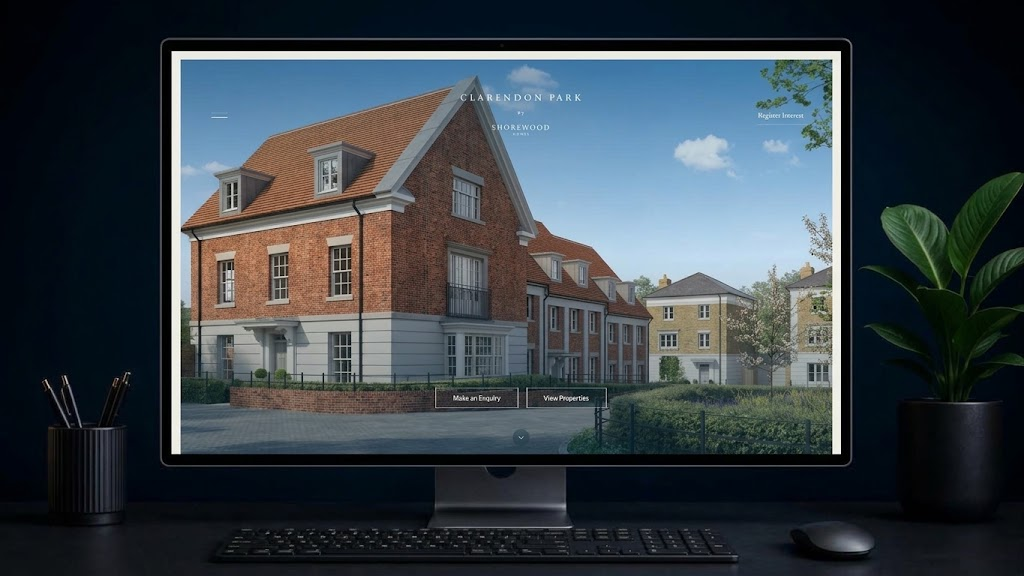
The question is less which one to choose and more where the enquiry should end up. Wherever it starts, it should land in one record that your sales team owns. We built the website for a 43-home development in Winchester, so this comes from doing the work.
How they compare
Portals and websites for property developers are built for different jobs. The table sets out the differences in general terms. Portal terms and packages vary, so check the detail of any agreement yourself.
| Property portal | Your own website | |
|---|---|---|
| Reach | Wide. Buyers already searching by area and price | Narrower. People who know the name or find you locally |
| Cost model | Ongoing listing or membership fees, sometimes with paid extras | A build cost, then upkeep and any advertising you choose |
| Control | A fixed listing format, shown beside competitors | You decide the content, order and emphasis |
| Data ownership | Enquiry details reach you. Wider audience data stays with the portal | Enquiries, register and visitor data are yours to manage |
| Brand | Your listing looks much like every other listing | The development has its own identity |
| Enquiry quality | Often more enquiries, with less detail | Often fewer, usually better informed |
Neither column wins outright. The aim is to generate more property buyer enquiries overall, and to know where each one came from.
What portals do well
A portal puts your homes in front of people at the moment they are comparing options. That is hard to match.
- They reach buyers who have never heard of you or the development.
- They let people filter by price, bedrooms and area, so the audience is already in the market.
- They can alert buyers who have saved a search.
- They give a new development visibility from the day it is listed.
The limits come with the format. Your listing sits next to rival developments and resale homes, the space for your story is small, and the enquiry form is the portal's, not yours. Our guide on how to market a new property development shows where portals fit among the other channels.
What your own website does well
Your site is the one place where you set the terms. You can show the location properly, the site plan, every house type and the current availability, and let buyers ask about a specific plot.
- The full story: area, specification, buying process and the people behind the development.
- A register of interest that belongs to you and can be built before launch.
- Enquiry forms that ask your questions and carry the plot number.
- Measurement you control, so you can see which pages and sources lead to viewings.
- One address for signage, brochures, adverts and emails to point to.
The limit is reach. A new site does not arrive with an audience, so it needs local search, signage, advertising and the portals to feed it. Our property development website checklist lists what the site should contain.
Use the portal as a feeder
The arrangement that suits most developers is simple. The portal listing wins attention, and the website does the explaining and the converting.
- Use the development name consistently on the portal, the signage and the website, so buyers who search for it find your site.
- Keep prices and availability identical in both places. Differences make buyers doubt both.
- Reply to portal enquiries with what the listing could not show: the site plan, the house type detail and a way to book a viewing.
- Invite portal enquirers onto the register of interest, with their agreement.
- Record portal and website enquiries in the same place, tagged by source.
If an estate agent manages your portal listing, agree in advance how enquiries are passed on, how quickly, and who replies.
A hypothetical example: a buyer sees your listing on a portal on Sunday evening and sends a short message. On Monday the reply thanks them by name, offers a choice of viewing times and points out the house types that match their search. They look at the site plan on your website before they visit. The portal and the site have each done their job.
Where enquiries should end up
A buyer does not care which form they filled in. They care whether someone replies. Send every enquiry, from any source, to one record with the plot or house type and the source attached. Then compare. Over a few months you will see which source produces viewings and reservations, not just messages, and you can decide what each is worth to you. Judge each source on the viewings it produces, not on the number of messages.
Whichever route they use, people are giving you personal details. Tell them how these will be used, and only send marketing they have agreed to. Data protection rules apply, so check your own obligations. Keep the facts in listings and on the site accurate too, since consumer protection and advertising rules cover both.
When the balance shifts
Before launch, your own site and register matter most, because there is nothing to list yet. At launch, portals add reach quickly. Mid-development, the show home and local search grow in importance. For the last few plots, a focused portal listing and an email to the register often work together. Review the mix at each phase, and do not let any one channel run on habit.
Common mistakes
- Relying on portal listings with no development website behind them.
- Showing different prices or availability in different places.
- Sending portal enquirers a generic reply with no next step.
- Treating portal enquiries and website enquiries as separate lists.
- Paying for listing extras without checking what they produced.
- Letting an agent hold all the buyer data with no agreed access.
Common questions
Can we sell a development without the portals?
Some small or very local schemes do, using signage, local search and a register of interest. Many developers find portals bring buyers they would not otherwise reach. Test it by tracking enquiries by source.
Can we rely on the portals alone?
You can list, but you give up control of the story and have nowhere to build a register before launch. Buyers who look you up after seeing a listing also expect to find a proper site.
Which gives better enquiries?
It varies by development. Portal enquiries are often brief and need qualifying in the first reply. Website enquiries tend to come from buyers who have read more. Only your own tracking will tell you for certain.
Should the estate agent or the developer run the website?
The developer should own it, along with the domain and the enquiry data, even if an agent handles viewings. That way the site, the register and the records stay with you from one scheme to the next.
What to do next
Search for your development as a buyer would: on a portal, then by name. Compare what each shows, check the prices match, and send a test enquiry through both.
If you would like an outside view of the website side, ask for our free 24-hour audit. A founder records a personal video walkthrough of your website within 24 hours, showing how it backs up your listings and where enquiries could be lost. No call is needed, and a 15-minute call is optional.
Want this applied to your website?
George or Nicholas will record a personal walkthrough of your site within 24 hours.
Not ready for an audit? See Websites and systems for property developers.