
The club name gets lost.
We see Google listings with the club’s own name buried in the page title, behind generic wording or the provider’s brand. Even someone searching for the club by name has to work to recognise the right result.
Golf club website design
Someone has a free afternoon and wants to play your course. They search on their phone, find the club and try to book. A buried visitor page, another login, a booking button that disappears off-screen. By the time they find the next step, another club is already easier to choose.
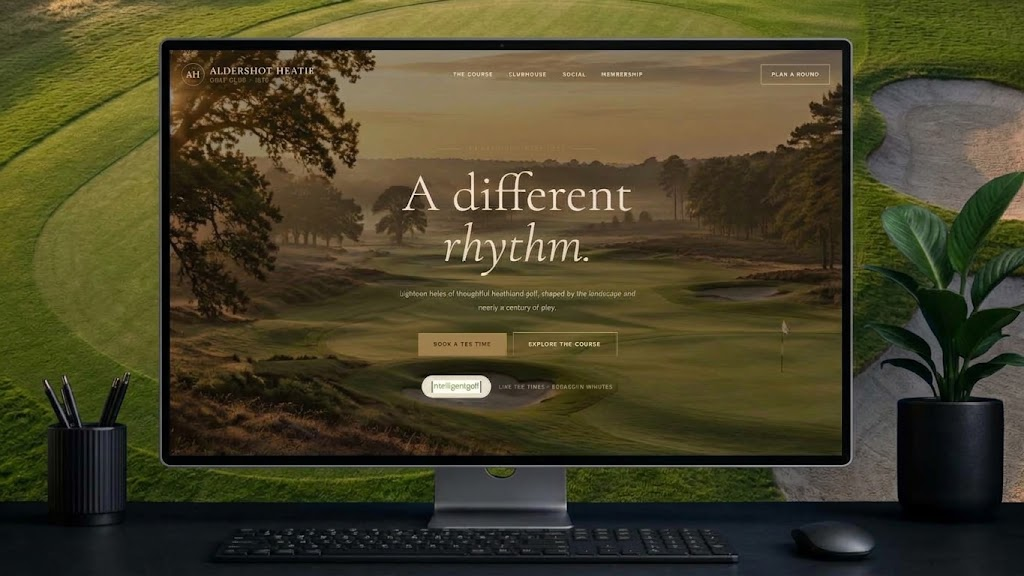
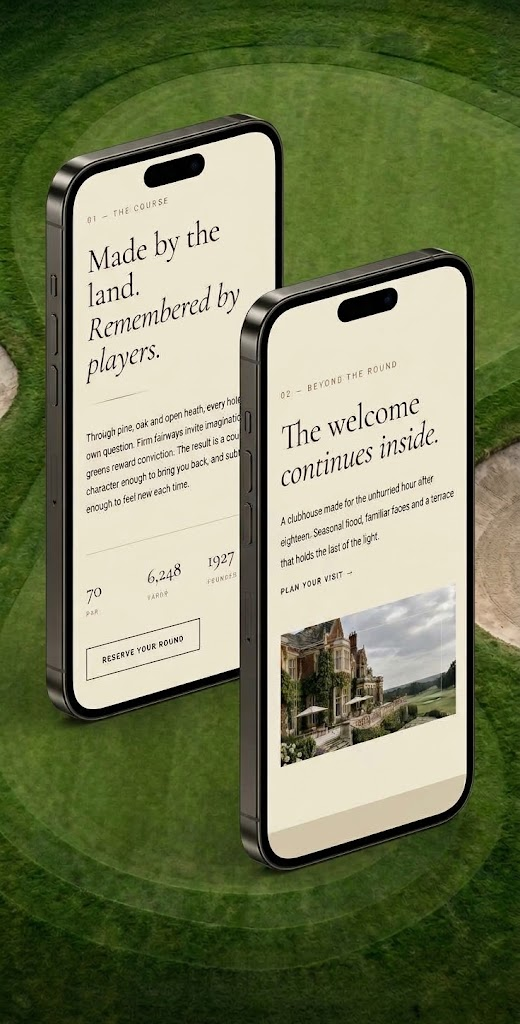

From looking at hundreds of club websites.
We see Google listings with the club’s own name buried in the page title, behind generic wording or the provider’s brand. Even someone searching for the club by name has to work to recognise the right result.
Most of the traffic is on a phone, but visitor booking journeys still feel designed for a desktop. Menus, redirects and cramped booking screens turn a straightforward tee time into a small project.
Society and green fee enquiries arrive, then sit without a clear follow-up. The visitor has shown interest, but the next conversation depends on somebody finding the time to pick it up.
Clubs are locked into a provider’s layout, unable to change the pages or journeys that matter. The website follows the template rather than the way visitors choose, enquire and book.
Delivered golf work
A focused digital home for a golf academy. Designed to introduce the coaching offer, communicate the character of the business and help prospective golfers find their next step.
The website needed to make the academy approachable without losing its professional standard. A visitor should be able to understand the coaching offer, get a feel for the academy and see how to make an enquiry. The aim was a digital experience that worked for someone discovering the business for the first time, as well as someone already ready to get in touch.
We organised the experience around the golfer rather than the internal structure of the business. Clear headings, considered imagery and a straightforward page hierarchy make the offer easier to explore. The same attention went into the mobile experience, where the introduction and next step need to work in a much smaller space.
A purpose-built website that gives the academy a clear, consistent presence across desktop and mobile. The design brings the coaching offer and business identity together, with readable information and a direct route to enquiry. A digital starting point that supports the human coaching experience rather than competing with it.
A clearer introduction to the academy, with the coaching experience at the heart of the website.
Explore the Summit Golf Academy case study
Real words. Golf work.
Been fantastic with my golf brand! George is extremely professional and has helped every step of the way. His knowledge is second to none!
Jack Ormiston
Google review · 5/5
We work natively with IG Golf, ClubV1, BRS Golf, GolfNow and many more. We check the supported booking and integration options with your provider before agreeing the scope.



We are working with Stoneham Golf Club. Course images, the case study, quotes and feedback are coming soon.
Behind the booking
A missed call could be a visitor asking about a round or an organiser planning a society day. These are existing workflows we can adapt around your team: a helpful text after a missed call, or a new enquiry delivered to the person who can act. We agree permissions, ownership and the follow-up before connecting anything.
A missed call triggers a text so the conversation can continue.
A new website enquiry starts a WhatsApp conversation.
Questions worth answering
Costs, search visibility, membership and society bookings. These guides put the practical questions in one place, including how to get a website proposal through the committee.
The short answer: a properly built golf club website in the UK costs £3,000–£10,000 in 2026, plus £100–£500 per month for hosting, updates and support. Template DIY builds run £500–£1,500 but rarely integrate with your booking system or win visitor revenue. Resort-grade builds with hotel, wedding and multi-course booking run £10,000–£25,000+. The real question isn't the cost - it's whether the site pays for itself in green fees and society days within the first season. A good one does.
Read the guideMost golf clubs are invisible on Google for one of three reasons: their Google Business Profile is incomplete or unclaimed, their website has no page targeting the searches golfers actually make, or their booking system sits on a different web address so the pages golfers land on do not belong to the club at all. All three are fixable without rebuilding the website.
Read the guideMost clubs try to grow membership by advertising to strangers, when their best prospects are the visitors already playing the course and the golfers who left in the last two years. Fix the joining process, give people a reason to join beyond a handicap, and market to people who have already played your course. That order matters, because the first two make the third work.
Read the guideThe short answer: society organisers find venues by searching Google for terms like "golf society day Kent" or "golf day venues near Guildford", then choose between clubs based on three things: a clear package with pricing, photos of real groups enjoying themselves, and Google reviews. Most UK clubs have no pages targeting those searches, no published packages and under 100 reviews - which is why the same handful of clubs in every county take a disproportionate share of society revenue. Fixing this is structural, not expensive.
Read the guideCommittees rarely reject website projects because of the money. They reject them because the case arrives as an aesthetic opinion rather than a business case, because nobody has answered "what happens if we do nothing", and because it lands at the wrong point in the club's financial year. Build the case around lost revenue, bring one page rather than twenty, and time it to the budget cycle.
Read the guideThe short answer: businesses with many recent reviews win the local map pack, win the click, and increasingly win AI recommendations - ChatGPT and Google's AI results both lean on review data when suggesting local businesses. You don't get reviews by being good; you get them by asking at the peak moment, making it a 30-second job, and doing it every single day. Five reviews a week - entirely achievable for any customer-facing business - is 250+ a year. Never pay or incentivise for them: Google prohibits it and penalises it.
Read the guideMade for a real club decision
A club website rarely gets decided in one conversation. There is a committee, a budget cycle and often a plan to wait until next season. We can put the case on one page: what is getting in the way now, what we propose to change, the scope and the cost. Something you can table, discuss and make a decision on.
Talk through your club’s briefOur website pricing starts at £2,500. The right scope depends on your pages, existing tee booking provider and any enquiry systems you need. We agree the work and price before starting, so your committee has a clear proposal rather than an open-ended bill.
We start by checking your provider’s booking links, embeds and integration options. Where the provider supports it, we keep the existing system and make the journey into it clearer. Any limitations or changes are discussed before we agree the scope.
We agree which pages your team needs to update and provide a handover for that workflow. You can manage routine content, or choose ongoing care from £100 per month. Booking availability stays with your booking provider unless we agree otherwise.
Timing depends on the scope, the content you have ready and the booking systems involved. We agree a delivery plan with your team before starting, including committee review points and any launch window you need to work around.
Starter is £2,500 for up to 5 pages. Complete is £3,500 for 8 to 12 pages, SEO foundations, enquiry and booking journeys, and analytics handover. Site and systems starts at £6,000. Automation is separately scoped from £999 per workflow. The pricing page explains what each covers.
Yes. We can talk through the proposal with your committee and prepare a one-page case covering the current issues, proposed changes, scope and cost. Tell us how decisions are made at your club so we can make the conversation useful.


The people you speak to are the people planning and building the work. Based in Winchester, we bring the website, the enquiry journey and the practical club decision into the same conversation.
A new website, a difficult booking journey or a proposal for the next committee meeting. Tell George and Nicholas where you want to start.