
The short answer
Many developments do not have a traffic problem. They have a next-step problem. Buyers look at the homes, cannot see an easy way to ask about the one they like, and leave. Fix that first, then reply faster than the development down the road, then work on being found.
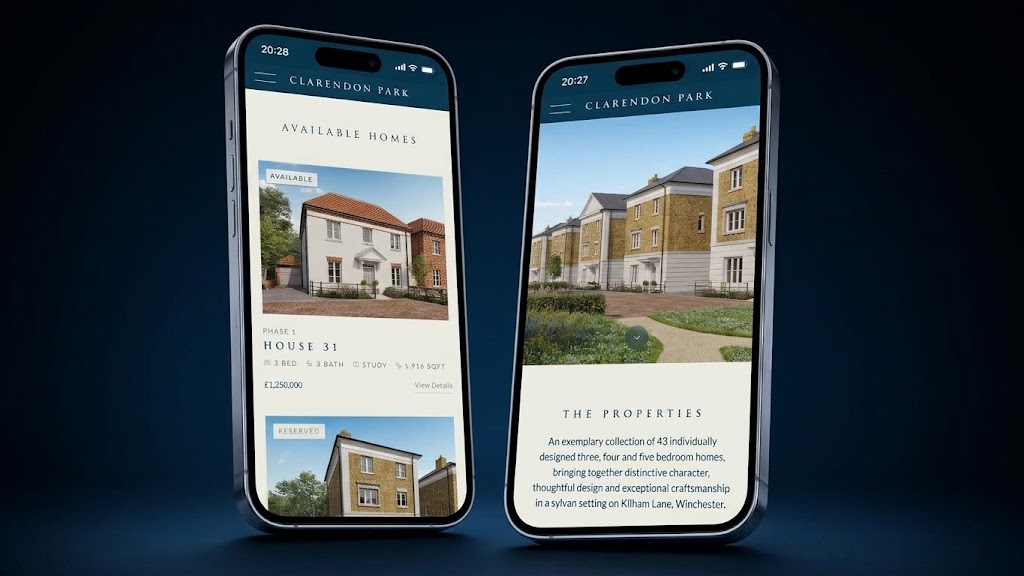
Quality matters as much as volume. A sales team would rather have a few enquiries that name a plot and a timescale than a long list that only says 'please send details'. We built the website for a 43-home development in Winchester, so this comes from doing the work.
Where buyer enquiries come from
Enquiries reach a developer by several routes, and each behaves differently. Good websites for property developers pull them into one record so they can be compared.
| Source | What it tends to bring | What to watch |
|---|---|---|
| Your own website | Buyers who have read about the development | Whether each plot has its own enquiry route |
| Property portals | Buyers already searching by area and price | Short messages with little detail |
| Local search | People looking for the development name or new homes in the town | Whether your profile and pages appear |
| Paid social and search | Local awareness and register sign-ups | Curiosity clicks with no plan to move |
| Signage and the show home | Very local, often serious buyers | Walk-ins that never get recorded |
| Emails to the register | Warm buyers hearing about releases | A list that has gone quiet |
Portals and your own site do different jobs, which we compare in property portal vs your own website.
Once enquiries arrive by more than a couple of routes, a shared inbox stops coping. Our guide to a CRM for property developers covers how to track each buyer from the first message onward.
Make the next step obvious
Give buyers a small set of clear actions and repeat them on every page. People are at different stages, so one button does not suit everyone.
- Book a viewing: show real slots at the show home, not a form asking the buyer to suggest a time.
- Request the brochure: a quick download in return for a name and an email address.
- Ask about a plot: a button on each plot or house type that carries the plot number into the form.
- Register interest: for people waiting on a later phase or a house type not yet released.
Put a phone number that is answered next to these, shown as tap-to-call on a mobile. Matching the actions to the phase of the build also helps, as our guide on how to market a new property development sets out.
Qualify without putting buyers off
A few questions help the sales team prepare. Too many, and people abandon the form. Ask only what changes how you respond, make most questions optional, and use tick boxes in place of long text fields.
- Which house type or number of bedrooms are you interested in?
- When are you hoping to move?
- Do you have a property to sell, and is it on the market?
- Are you a first-time buyer, moving home or buying as an investment?
- How would you prefer us to contact you?
Leave detailed finance questions for the conversation. Say what you will do with the answers, and only send marketing people have agreed to receive. Data protection rules apply, so check your own obligations.
Reply quickly, then keep in touch
Speed of response
A buyer who enquires on a Saturday morning is often visiting other developments that afternoon. Send an automated acknowledgement straight away with a named contact and the show home times, then follow with a personal reply or call as soon as someone is free. Agree who covers weekends and holidays, because that is when buyers look.
Nurture the register of interest
Many people on a register are not ready to reserve yet. They may have a home to sell or be waiting for a later phase. Email them when something real happens: a new release, the show home opening, build progress, a finished street. Short, useful and occasional is the right tone. Give them first sight of new plots before the wider market.
Be found locally and stay visible
Local search
People search for the development by name after seeing a sign, and for phrases such as 'new homes in' followed by the town. Make sure your site has a page that plainly answers both, with the development name, the town and the house types in the text. Set up a Google Business Profile for the show home with accurate opening times and photographs. Nobody can promise where you will appear, but being clear and consistent helps.
Retargeting
Retargeting means showing adverts to people who have already visited your site. It can remind someone about a viewing they nearly booked. It relies on cookies or similar tracking, so visitors need a proper consent choice, and the rules are worth checking for your own set-up.
Track enquiries by source and plot
Record the source and the plot or house type against every enquiry, including phone calls and walk-ins. Ask 'how did you hear about us' at the show home and write it down. Over a few months this shows which channels bring viewings and which only bring clicks, and which house types need more attention.
- Source: website, portal, phone, show home walk-in, advert or email to the register.
- The plot or house type the buyer asked about.
- The date and time, and how long the first reply took.
- The outcome: viewing booked, viewing attended, reserved or not proceeding, with the reason.
Review the record with the sales team each month. If one source brings plenty of messages but few viewings, look at the first reply before you blame the channel.
Common mistakes
- One general contact form with no mention of plot or house type.
- Asking for a full financial picture on the first form.
- Replying on Monday to an enquiry sent on Friday evening.
- Building a register of interest and never emailing it.
- Counting portal enquiries and website enquiries in separate places.
- Spending more on adverts before fixing the enquiry routes.
Common questions
Why do we get visits but few enquiries?
Usually because the next step is unclear or asks too much. Check whether a buyer on a phone can book a viewing or ask about a plot within a couple of taps. Out-of-date availability also stops people enquiring.
Are portal enquiries worse than website enquiries?
Not worse, but often thinner. Portal messages tend to be short, so the first reply has to do the qualifying. Website enquiries usually come from people who have read more about the development.
How fast should we reply?
As fast as you can do it well. An immediate automated acknowledgement followed by a personal reply the same day is a sensible standard. What matters most is that it is consistent, including at weekends.
Should we add live chat?
Only if someone will answer it. An unanswered chat window is worse than none. A clear phone number and a short form often do more for a small sales team.
What to do next
Open your development site on a phone and try to ask about one specific plot. Count the steps, then time how long the reply takes. Those two tests tell you most of what needs fixing.
If you want a second view, ask for our free 24-hour audit. A founder records a personal video walkthrough of your website within 24 hours, showing where a buyer might give up before enquiring. No call is needed, and a 15-minute call is optional.
Want this applied to your website?
George or Nicholas will record a personal walkthrough of your site within 24 hours.
Not ready for an audit? See Websites and systems for property developers.