
The short answer
Plan the marketing in phases that follow the build. Start a register of interest before there is anything to see, launch with a complete website and real availability, make the show home the centre of activity once it opens, and change the message again for later phases and the last few plots.
The developments that sell steadily tend to do the plain things well: one clear home for the development online, every enquiry captured and answered, and a record of which channel produced which buyer. We built the website for a 43-home development in Winchester, so this comes from doing the work.
The four phases of a development campaign
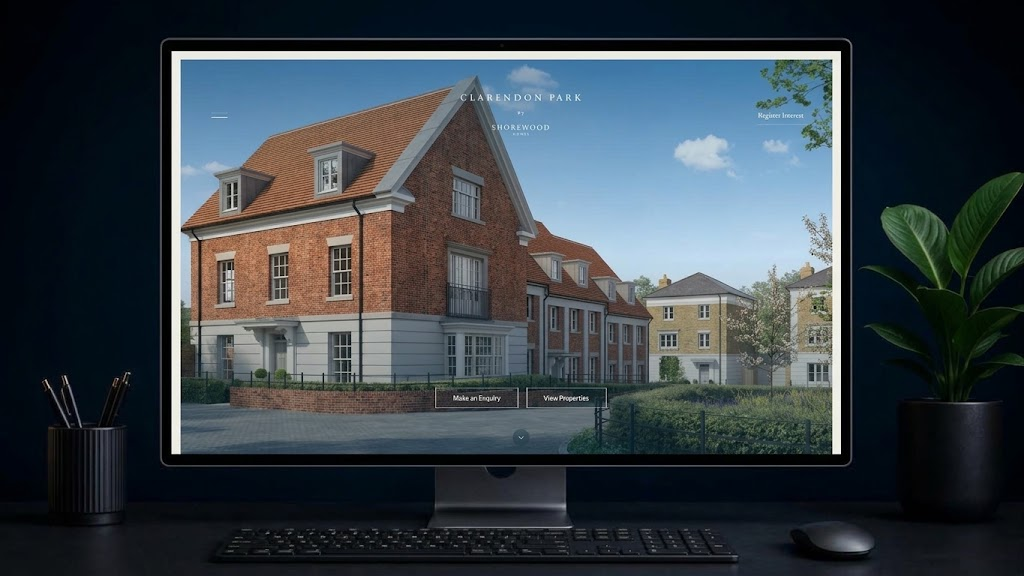
The website sits underneath all four phases. Well-built websites for property developers change with the build: a sign-up page first, a full development site at launch, and a live availability list by the end.
| Phase | Main aim | What buyers need |
|---|---|---|
| Pre-launch | Build a register of interest | Location, a sense of the homes, a way to sign up |
| Launch | Turn the register into viewings and reservations | Prices or price guidance, plot availability, how to book |
| Show home | Get the right people through the door | Opening times, booking, directions |
| Later phases and last plots | Keep momentum and sell what is left | What is still available, real photography, move-in timing |
Pre-launch
Buyers start looking long before the first plot is released. A simple page with the location, the type of homes and a register of interest form lets you collect names while the site is still groundworks. Ask what people are looking for (bedrooms, budget range, timescale) so the launch email can be relevant. Our guide on how to generate more property buyer enquiries covers the forms and the follow-up in detail.
Launch
The people on the register should hear first, before the portals and the adverts. Give them a date, the homes being released and one clear way to book. Then open up the wider channels.
Show home
Once the show home is open, most marketing should point at one action: book a viewing. Photography and film of the finished home should replace the CGIs (computer-generated images) wherever they can.
Later phases and last plots
As plots sell, the story changes from a new launch to a settled place where people already live. Update the availability, show the finished streets, and give the remaining homes their own attention so they are not left at the bottom of a list.
The assets you need before launch
Most delays at launch come from missing assets, not missing budget. Agree these early, because every channel depends on them. Our property development website checklist covers how each one should appear on the site.
- A name and brand for the development, used the same way on signage, the brochure and the website.
- CGIs of the street scene and key house types, clearly labelled as computer-generated, then photography once homes are built.
- A site plan that shows every plot, its house type and its orientation.
- Floor plans with dimensions and a specification for each house type.
- A plot availability list with prices or price guidance, kept current by one named person.
- A brochure, in print for the show home and as a download in return for contact details.
The channels that bring buyers
No single channel carries a development. Each does a different job, and they work best when they all send people to the same place. Portals bring reach and your own site gives you control, which we compare in property portal vs your own website.
- Your own website: the home of the development, with the full story, live availability and every enquiry route.
- Property portals: reach buyers who are already searching by area and price.
- Local search: a Google Business Profile for the show home, and pages that answer searches for the development name and for new homes in the town.
- Paid social and paid search: useful for building the register before launch and filling show home appointments, aimed at the local area.
- Signage: hoardings, direction signs and the show home itself. People who pass the site are often your most local buyers.
- Estate agents: where an agent is selling for you, agree who answers enquiries and how they are recorded.
- Email to the register: the cheapest channel you have, and usually the warmest.
Capture and follow up every enquiry
Enquiries arrive by web form, phone, portal email, social message and in person at the show home. If each lands in a different inbox, some will be missed. Put them all into one list or CRM (customer relationship management system) the same day, with the source and the plot or house type they asked about.
- Acknowledge every enquiry quickly, with a real name and a next step.
- Offer a viewing slot instead of asking the buyer to call back.
- Record the outcome of each viewing, even when it is a no.
- Keep in touch with people who are not ready yet. Many buyers have a home to sell first.
- Tell the register about new releases before anyone else.
You are collecting personal data, so tell people what you will use it for and only send marketing they have agreed to. Data protection and electronic marketing rules apply, and you should check your own obligations.
Measure by plot and source
Website visits and advert clicks say little by themselves. The useful questions are which channels produce viewings and reservations, and which plots or house types attract interest while others sit quiet.
| What to track | Why it matters |
|---|---|
| Enquiries by source | Shows which channels earn their budget |
| Enquiries by plot or house type | Shows where demand is strong and where it needs help |
| Viewings booked and attended | Tests whether enquiries are serious |
| Time to first response | Slow replies lose buyers to the next development |
| Register size and email response | Shows how warm your own audience is |
Review it every month with the sales team, and move money toward what is working.
Keep the marketing accurate
Buyers make a large decision partly on what your marketing tells them. Prices, sizes, specification, images and timescales should be accurate and kept up to date, and CGIs should be described as such. Consumer protection law, advertising rules and the New Homes Quality Code (for developers registered with it) all set expectations here. This is not legal advice, so check what applies to you.
Common mistakes
- Launching on the portals before the website and availability are ready.
- Collecting a register of interest and then not emailing it.
- Leaving sold plots and old prices on show.
- Using CGIs for months after real homes could be photographed.
- Letting enquiries sit in several inboxes with no single record.
- Judging the campaign on clicks instead of viewings and reservations by source.
Common questions
When should marketing for a new development start?
As soon as you can describe the location and the type of homes. A register of interest page and site signage can run from the start of the build. The earlier you start, the more people you have to tell on launch day.
Do we need a separate website for each development?
It depends on the size of the scheme and your brand. A larger development often earns its own site or a substantial section of your main site. What matters is that each development has a complete home online with its own enquiry routes.
Should we show prices?
Buyers expect at least price guidance, and hiding it tends to bring enquiries from people outside the budget. If prices are not final, give a guide and say when they will be confirmed. Whatever you show must be accurate.
What to do next
Write down the phase you are in, list the assets you have and the ones you are missing, and check that every enquiry route ends in one record. That alone tends to show where buyers are being lost.
If you already have a development site, ask for our free 24-hour audit. A founder records a personal video walkthrough of your website within 24 hours, showing what a buyer sees and what we would change. No call is needed, though a 15-minute call is there if you want one.
Want this applied to your website?
George or Nicholas will record a personal walkthrough of your site within 24 hours.
Not ready for an audit? See Websites and systems for property developers.