
The short answer
Decide what work you want first. Most established builders are not short of enquiries. They are short of the right ones: the extension, new build, refurbishment or fit-out at a value that suits the team. Marketing is how you make that work more likely and the small, awkward jobs less likely.
Nearly every recommendation is checked before the phone call. The client looks at your website, your Google listing and your reviews. If those show the projects you want more of, in detail, the recommendation holds. If they show nothing, or a bit of everything, it weakens.
Decide the work you want
Write it down in three parts: project type, project value and area. For example: rear and side extensions and whole-house refurbishments, above a value that justifies a site manager, within a sensible drive of the yard. Be specific enough that anyone in the office could say yes or no to an enquiry from it.
- Project type: the work you do best and want to be known for.
- Value: the smallest job worth pricing properly, and the largest you can resource.
- Area: the towns you can reach without the travel eating the margin.
- Client: homeowners, developers, commercial landlords or a mix.
Everything else follows from this. It decides which projects you photograph, which pages you write and which enquiries you decline. If the aim is more high-value building enquiries, this step does most of the work.
Show finished projects properly
A gallery of unlabelled photos proves little. A client planning a large project wants to see one like theirs and understand how it went. Give each finished project its own page: the brief, what you built, roughly how long it took, any constraints such as a tight site or restricted access, and good photographs taken once the work is complete.
Ask permission before you publish, and leave out anything that identifies the address if the client prefers. A handful of well-documented projects of the right kind does more than dozens of pictures of everything you have ever done.
Make the website the place every recommendation checks
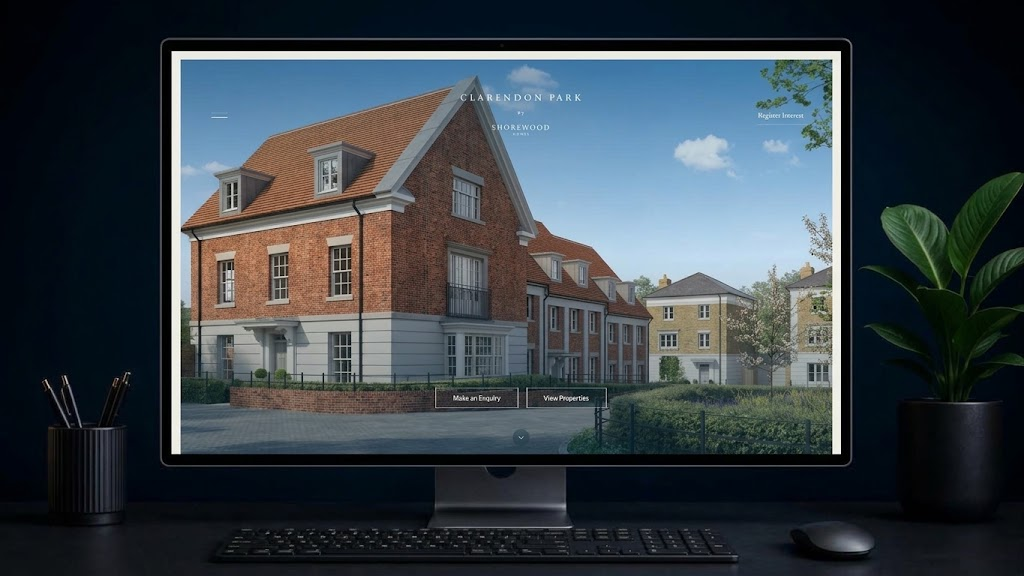
Good websites for builders answer the questions a serious client has before they call: what you take on, where, how a job runs, who they will deal with and what you have built. They make it easy to enquire and hard to mistake you for a general handyman.
Our construction website checklist goes through each part in detail. The short version: say what size of project you take on, show the work, explain the steps from enquiry to handover and put named people on the site.
Be found locally and be believed
Local search
People search for a service and a place: a builder in their town, or a loft conversion or fit-out contractor nearby. A complete Google Business Profile (the free listing that appears in Google Search and Maps), a page for each main service and a page for each area you cover give Google something to match. Our guide to SEO for builders covers this in full.
Reviews and accreditations
Ask every satisfied client for a review once the job is finished and snagging is closed. Reviews on Google that mention the type of project tell a reader more than a star rating alone. List the accreditations, trade body memberships and insurance you hold, and only those you hold. What applies under building regulations, health and safety duties such as CDM, planning and consumer contract law depends on the job, so check your own obligations and do not make claims you cannot support.
Relationships, signboards and neighbours
Larger projects often arrive through other professionals. Architects, building surveyors, structural engineers and interior designers are regularly asked to suggest a builder. They tend to recommend firms that price reliably, communicate well and finish properly.
- Keep in touch with the practices you have worked with, and send them photos of the finished job.
- Introduce yourself to local practices whose projects match the work you want.
- Put a clean, readable signboard on every site, with the company name and one way to get in touch.
- Send a note to neighbours before work starts, with a name and number for any concerns.
- Keep the site tidy. Neighbours watch a project for months and often plan their own.
Follow up quotes and say no to the wrong work
A detailed quote takes real time to prepare, and clients often take weeks to decide. Do not send it and wait. Confirm it arrived, offer to talk it through and check in at sensible intervals with something useful to add. Much of the remembering can be automated without losing the personal tone.
Turning work down is part of marketing. Each small job you take to keep busy fills the diary, the gallery and the reviews with work you do not want more of. Decline politely, say what you do take on and suggest someone else where you can.
Track where good projects come from
| What to record | Why it matters |
|---|---|
| Source of each enquiry | Shows which channels bring work at all |
| Project type and rough value | Separates good enquiries from busy work |
| Who referred it, by name | Tells you which relationships to look after |
| Quoted, won or lost, and why | Shows where work slips away |
| Margin on completed jobs | Confirms which work is worth pursuing |
A spreadsheet is enough to start. Ask every enquirer how they found you and write it down. After several months you will see which sources produce the projects you want, and you can put your effort there.
Common mistakes
- Saying you do all building work, large or small.
- Showing photos with no explanation of the project.
- Listing accreditations or memberships that have lapsed.
- Leaving the Google listing with old photos and unanswered reviews.
- Sending a quote and never following it up.
- Judging marketing by the number of enquiries, not their value.
Common questions
Do we need a website if most work comes by recommendation?
Yes, because the recommendation is usually checked online before the client calls. The site does not need to be large. It needs to show the right projects and make you easy to contact.
Should a building company be on social media?
It can help if you post finished and in-progress projects regularly, because it shows you are active. It rarely replaces a good website and a complete Google listing. Pick one platform you will keep up.
Is paid advertising worth it for a builder?
It can bring enquiries quickly, but it tends to bring a wide mix, including small jobs. It works best when the advert and the page it leads to are specific about the projects you take on. Results vary and nothing is guaranteed.
How long before marketing brings better projects?
Changes to the website and Google listing can alter the kind of enquiry you receive fairly soon. Search visibility and referral relationships build over months. Larger projects also take a long time to go from first contact to contract, so judge progress over a long period.
What to do next
Write down the work you want, then look at your website and Google listing as a stranger would. Ask whether they show that work, in that area, at that size.
If you would like a second opinion, ask for our free 24-hour audit. A founder records a personal video walkthrough of your website within 24 hours, covering what a prospective client sees and what we would change. No call is needed, and a 15-minute call is optional.
Want this applied to your website?
George or Nicholas will record a personal walkthrough of your site within 24 hours.
Not ready for an audit? See Websites and systems for builders.