
The short answer
Use both, and work steadily to move the balance towards direct. Platforms are good at putting you in front of people who have never heard of you. Your own website and phone line are better at keeping what you earn and bringing those people back.
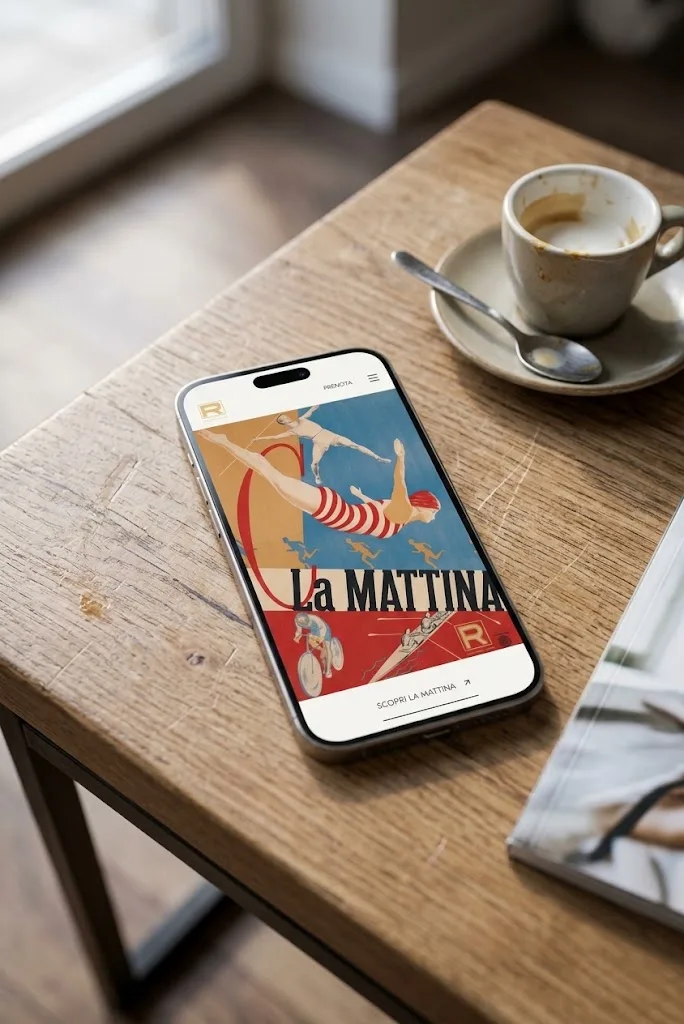
We built a café bar's website, booking flow and staff app, so this comes from doing the work. The pattern is the same for a restaurant table, a hotel room or a takeaway order. The platform finds the customer once. You then decide whether the second booking comes to you or goes back through them.
What each route gives you
A third-party platform is any service that sits between you and the customer: online travel agents for rooms, booking platforms for tables and experiences, delivery apps for food. A direct booking is one made on your own website, by phone, by message or in person. Good websites for hospitality treat the direct route as the main job of the site, not an afterthought.
| Third-party platforms | Direct bookings | |
|---|---|---|
| Reach | Wide. People browsing the platform find you without knowing your name | Narrower. People who already know you or find you in search |
| Cost model | Usually a share of each booking or order, sometimes with extra fees for promotion | Fixed costs for your website and booking system, plus your own marketing |
| Customer data | Often limited. The platform holds the relationship | Yours, if collected lawfully and with clear permission for marketing |
| Control of the experience | The platform sets the layout, the rules and how you appear beside competitors | You set the wording, the photos, the terms and the follow-up |
| Repeat business | The customer tends to return to the platform, where competitors are shown again | You can invite them back yourself |
Where platforms earn their place
Platforms are not the enemy. They invest in advertising and apps, and many customers start their search there out of habit. For a new venue, a quiet season or a visitor from out of town, they can fill tables and rooms that would otherwise sit empty.
- New venues with no local reputation yet.
- Tourists and business travellers who do not know the area.
- Quiet midweek periods and last-minute gaps.
- Delivery, where running your own ordering and drivers is a large undertaking.
The cost is that you rent the audience. Terms, ranking and fees can change, and you have little say. Read the contract, including any clauses about the prices you may show on your own site, and check your own position before changing rates.
Why direct is worth the effort
A direct booking keeps more of the sale and starts a relationship you own. You know who came, what they booked and when. With their permission, you can tell them about the new menu, the Christmas dates or a quiet Tuesday evening. That is where the long-term value sits.
Direct only works if people can find you without the platform. That is the job of search: an accurate Google Business Profile and pages that match what people look for. Our guide to local SEO for restaurants and venues covers that side.
The site then has to answer the practical questions before anyone will book. Our hospitality website checklist sets out what a venue site needs, from opening hours to menus and prices.
After the booking, the routine messages matter as much as the form. Set up well, booking automation for hospitality can send the confirmation, the reminder and a thank-you without adding work for the team.
How to shift the balance
Make booking direct the easiest route
Many people who find you on a platform also look at your website. If booking there takes longer, they go back to the platform. Put a clear booking button at the top of every page, keep the form short and make sure it works on a phone with one thumb. Ask only for the date, time, party size, a name and a contact detail, then confirm on screen straight away.
Give people a reason to book direct
You do not need to undercut the platforms. Offer something they cannot: the best tables, a welcome drink, flexible changes, early access to event tickets, or a plain line saying that booking direct supports the venue. Say it on the booking page and on the Google Business Profile people see in search. Point the booking link on that profile to your own site where you can.
Capture details for next time
Every platform guest is a chance to win the next booking. Look after them well, then give them a reason to come to you directly: a card with the bill, a sign-up for news, or an invitation to a regular evening. Marketing by email or text is covered by UK GDPR and PECR, so ask clearly, record the permission and check the rules for your own situation.
A sensible balance for most venues
Most venues use both, and that is fine. Treat platforms as a way to meet new customers and your own channels as the way to keep them. Review the split a few times a year: where bookings came from, what each route cost and how many platform guests later came back direct.
- Keep platform listings accurate, with the same hours, photos and menus as your own site.
- Hold some availability for direct bookings at peak times, where your contract allows.
- Answer the phone and messages quickly. A missed call often becomes a platform booking, or a booking somewhere else.
- Ask every guest how they found you, and record the answer.
Common mistakes
- Relying on one platform for most of your trade, with no plan if its terms change.
- A website with no way to book, or a booking link buried in a menu.
- Different prices, hours or menus on each platform and on your own site.
- Collecting email addresses with no clear permission, then sending marketing anyway.
- Discounting on platforms so often that regulars wait for the offer.
- Leaving a platform overnight without first building direct demand.
Common questions
Should we leave the platforms altogether?
Rarely, and not in one step. Build direct demand first, watch the numbers, then reduce your reliance where it makes sense. Some venues keep platforms for quiet periods only.
Can we charge less for booking direct?
It depends on your contracts and the rules that apply to you. Some agreements restrict the prices you can show elsewhere, so read the terms and take advice if unsure. Adding value, such as a better table or flexible changes, is often simpler than a lower price.
Do we need our own booking system?
You need a dependable way to take a booking without a phone call. That can be a booking tool built into your website, or a well-made enquiry form for larger events. What matters is that it is quick, works on a phone and confirms straight away.
How long does it take to shift the balance?
It tends to be gradual. Regulars change habits first, then search can send more people directly as your profile and pages improve. Nobody can promise a timescale.
What to do next
Book a table or room at your own venue on your phone, first through a platform, then through your own site. Note which was quicker and where you hesitated. Fix the direct route until it wins.
If you would like a second pair of eyes, ask for our free 24-hour audit. A founder records a personal video walkthrough of your website within 24 hours, showing where the direct route loses people. No call is needed, and a 15-minute call is optional.
Want this applied to your website?
George or Nicholas will record a personal walkthrough of your site within 24 hours.
Not ready for an audit? See Websites and systems for leisure and hospitality.