
The short answer
Organic social and paid social are often argued about as if you must pick one. They do different jobs. Organic is how people check you are real. Paid is how people who have never heard of you find out you exist.
We build the websites and follow-up systems that social traffic lands on, so this guide is written from what happens after the click. That is usually where the result is decided.
What each one is
Organic social is everything you post without paying the platform to show it: finished work, updates, short videos, replies to comments. The platform decides who sees it, and that is mostly people who already follow you.
Paid social is advertising on the same platforms. You choose an audience by place, interests or job, set a budget and pay for the advert to be shown or clicked. It reaches people who do not follow you.
| Organic social | Paid social | |
|---|---|---|
| What you pay | Time, every week | Money, plus time to manage it |
| How fast it works | Slowly, over months | Within days of starting |
| Who sees it | Mostly people who already know you | A new audience you choose |
| What stops when you stop | Little at first, then your presence fades | Everything, the same day |
| Best for | Trust, proof and staying in mind | Offers, launches and testing demand |
What organic social is good for
Before someone enquires, they often look you up. An account with recent posts, real work and replies to comments tells them the business is active and cared for. An account last updated two years ago raises a doubt, even if the work is excellent.
- Showing finished work, with a line on what was done and where.
- Introducing the people a customer will deal with.
- Answering the questions customers ask before buying.
- Staying in mind with past customers and people who refer work.
It rarely produces a flood of enquiries by itself. Judge it as proof and as a way to stay in touch, not as your main source of new work.
What paid social is good for
Paid social creates demand. Nobody on a social platform was looking for you, so the advert has to interrupt them with something worth stopping for. That makes it different from search advertising, where the customer is already looking. Our comparison of SEO vs Google Ads covers the search side.
- Launching something new to a defined local or professional audience.
- Testing an offer or a message before building a campaign around it.
- Reaching people who visited your website and did not enquire.
- Filling a quiet period with a time-limited reason to act.
The difference between capturing demand and creating it runs through most marketing decisions. Our guide on lead generation vs demand generation explains it.
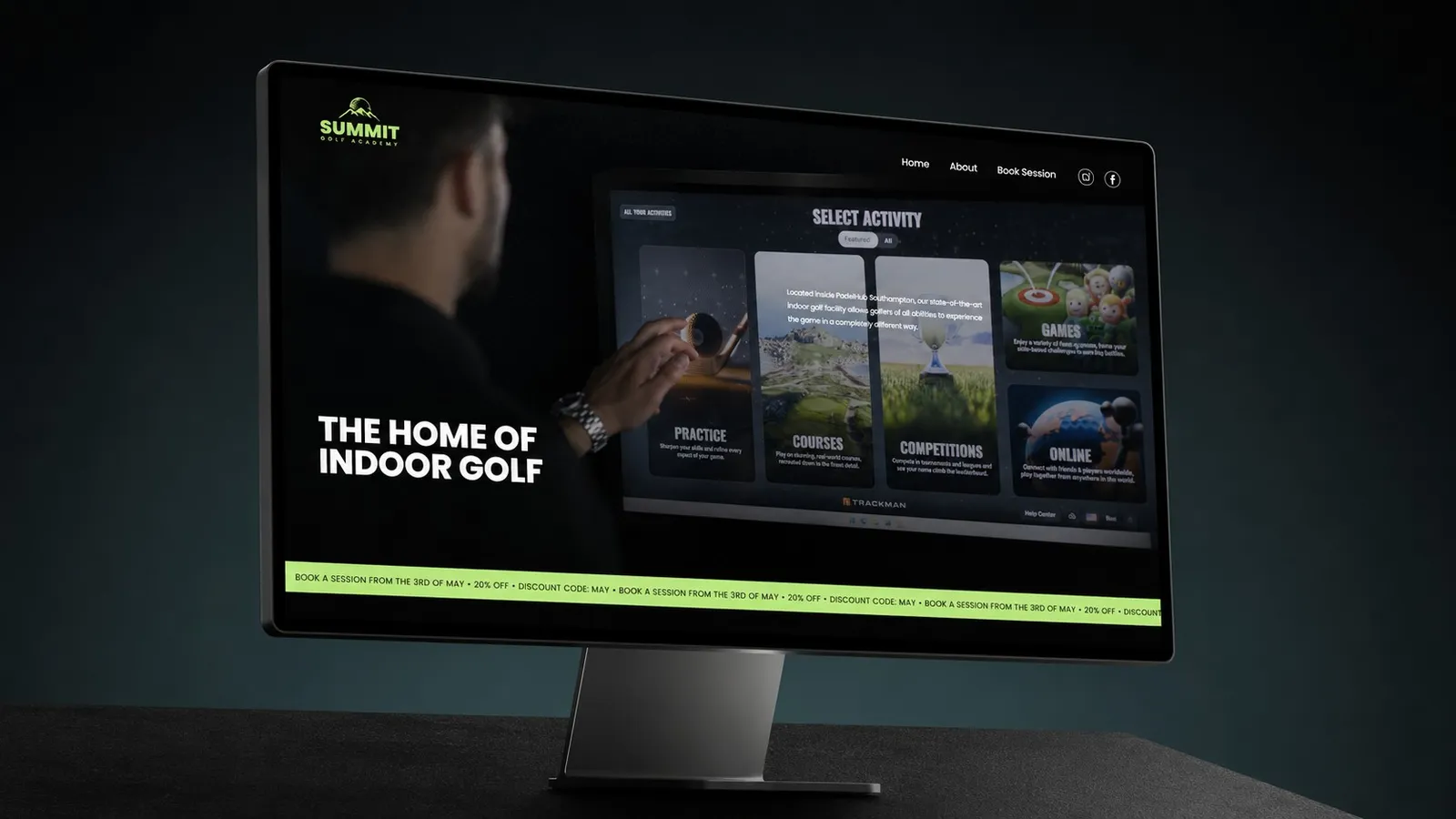
Where the click goes matters most
An advert can only deliver a visitor. If that visitor lands on a general homepage, has to hunt for the offer and meets a long form, the money is spent and nothing comes back.
Send paid traffic to a page built for that advert, with the same offer, the same words and one next step. Then make sure the enquiry is answered quickly. A business with a strong lead generation service behind its adverts gets far more from the same spend.
How to use them together
The two support each other. Organic posts show you which subjects people respond to, and those become your adverts. Paid adverts bring new people to a profile, and the organic posts there are what reassure them.
- Post organically every week so the account always looks alive.
- Promote the posts that earn the most response, to a wider audience.
- Run paid campaigns in bursts, around an offer, not all year by default.
- Use the same photographs and proof in both.
What it costs
Organic social costs time, and time is not free. Someone has to plan, photograph, write and reply. Paid social costs the advertising budget plus the skill to manage it, whether in-house or bought in.
Set the paid budget from what a customer is worth, not from what feels comfortable. Our guide on how much to spend on digital marketing shows the sum.
What to post when you have no time
Organic social fails most often because it depends on inspiration. A short list of repeatable subjects removes the need for it.
- One finished job a week, with a before and after if the work allows it.
- One question a customer asked this week, and your answer.
- One introduction to a person on the team.
- One review, shared with the customer's permission.
Take the photographs as part of the job, not as a separate task. A phone picture of real work, with two honest sentences, does more than a polished graphic with nothing to say.
What a good advert needs
An advert has a moment to earn attention from someone who was not looking for you. It needs a picture or video of the real thing, a first line that names the problem or the offer, and one instruction.
Match the advert to the page behind it. If the advert offers a free survey in a named town, the page should open with a free survey in that town. Every difference between the two gives the visitor a reason to leave.
Set a budget and a period for each test, and decide beforehand what result would count as working. Without that, every campaign looks promising and none can be judged.
Common mistakes
- Judging organic posts by likes instead of by enquiries and recognition.
- Paying to promote a post with no offer and no next step.
- Sending advert clicks to the homepage.
- Posting daily for a month, then nothing for a year.
- Running adverts with no way to tell which enquiries they produced.
Common questions
Which platform should we use?
The one your customers already use. Businesses selling to other businesses usually start with LinkedIn. Businesses selling to households usually start with Facebook and Instagram. One platform done well beats four done badly.
Can we skip organic and only advertise?
You can, but people who see the advert will often look at your profile before they act. An empty profile undermines the advert you just paid for.
How do we know whether paid social is working?
Track enquiries and customers, not clicks. Ask every new enquiry how they heard about you, and record it. Platform reports tend to be generous to the platform.
What to do next
Look at your own profile as a stranger would. Then check where your last advert sent people, and whether that page made the next step obvious.
If the landing page is the weak point, ask for our free 24-hour audit. A founder records a personal video walkthrough of your website within 24 hours, showing what a visitor from social media would meet. No call is needed.
Want this applied to your website?
George or Nicholas will record a personal walkthrough of your site within 24 hours.
Not ready for an audit? See Lead generation.