
The short answer
Lead follow-up breaks down in the gaps between people: the enquiry that sat in a shared inbox over a weekend, the call nobody returned, the promise to get back to someone that was never written down. Automating it means closing those gaps. Capture every enquiry in one place, acknowledge it quickly, give it an owner, chase the owner if it stalls and stop as soon as the customer responds.
None of that replaces the conversation. It makes sure the conversation happens.
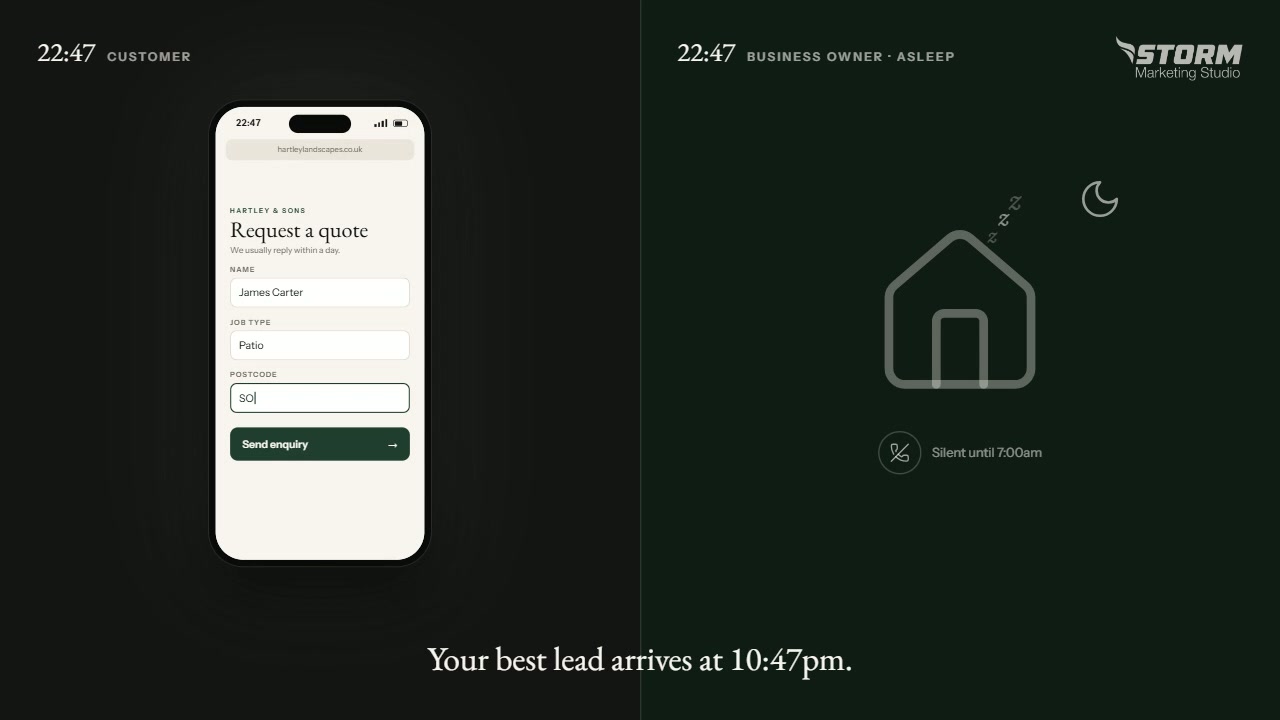
Why enquiries go cold
Ask most business owners how quickly they respond to a new enquiry and they will say the same day. Look at what actually happens and the picture is patchier. Enquiries arrive through a website form, a phone call, an email, a social message and a directory listing. Each lands somewhere different. Each depends on someone noticing.
- The form sends an email to an address one person checks.
- A missed call leaves no record unless someone listens to the voicemail.
- The person who took the call goes on holiday.
- Everyone assumes someone else replied.
The customer, meanwhile, has usually contacted more than one business. The first one to respond helpfully has a clear advantage, and that is rarely about price.
The five stages of follow-up
| Stage | What should happen | What to automate | What stays human |
|---|---|---|---|
| 1. Capture | Every enquiry lands in one record, with its source | Form, email and call log into one list or CRM | Nothing. This should never depend on memory |
| 2. Acknowledge | The customer knows you received it and what happens next | An immediate, honest confirmation | Wording it in your own voice, once |
| 3. Assign | One named person owns it | Routing by service, area or rota, with a notification | Deciding the rules |
| 4. Chase | Nothing sits untouched | A reminder to the owner, then to a manager, if there is no reply logged | The actual reply |
| 5. Close the loop | The enquiry ends as booked, quoted, lost or not suitable | Status prompts and a weekly summary | Judging the outcome honestly |
1. Capture everything in one place
Until every enquiry lands in the same place, nothing else can be relied on. That place can be a CRM or, for a small team, a well-structured shared list. What matters is that each record shows who the person is, what they asked for, how they found you and what has happened since. Our CRM vs spreadsheet guide explains when a simple list stops being enough.
2. Acknowledge quickly and honestly
An acknowledgement tells the customer their message arrived and what to expect: who will reply and roughly when. It should never imply that a person has already read the enquiry if they have not. For phone calls, a short text after a missed call does the same job, and our missed-call text-back guide covers how that works and what it costs.
3. Give it an owner
An enquiry that belongs to everyone belongs to no one. Routing can be as simple as one person per day, or as specific as service type and postcode. The owner is notified where they will actually see it, which for many teams is a phone, not an inbox.
4. Chase the team, not just the customer
This is the part most businesses miss. Reminders to the customer are common. Reminders to your own team are what stop enquiries dying. If an enquiry has no logged response after an agreed time, the owner is nudged. If it is still untouched later, someone senior is told.
5. Close the loop
Every enquiry should end with a status. That is what lets you see how many were booked, how many were quoted and how many went nowhere, and it is the only honest way to judge where your marketing money is working.
What a good first response looks like
- It arrives within minutes during working hours.
- It uses the person's name and refers to what they asked.
- It says who will be in touch and when.
- It offers one easy next step, such as a time to call.
- It can be replied to, and the reply reaches a person.
Mistakes to avoid
- Sending a long automated sequence that carries on after the customer has replied.
- Pretending an automated message was typed by a person.
- Automating before you have agreed who owns enquiries.
- Texting or emailing people in ways the rules do not allow. Check what applies to your messages before switching anything on.
What it costs
At Storm, automation on its own starts from £999 per workflow, priced around the tools involved and the testing needed. A capture, acknowledge and assign workflow is a typical first project. Our guide to what business automation actually costs covers the wider ranges.
The useful comparison is the value of one enquiry. If a single recovered job or client is worth more than the build, the question is not whether to do it but which gap to close first.
How to start this week
- List every route an enquiry can take into the business.
- For each one, write down where it lands and who sees it.
- Pick the route with the most volume and the least reliability.
- Agree who owns new enquiries and how fast they should be answered.
Quotes need the same discipline once they have been sent, which we cover in how to automate quote follow-ups.
Common questions
Do we need a CRM first?
Not necessarily. You need one reliable place for enquiries. For some teams that is a CRM from day one. For others a structured list is enough to begin with.
Will customers mind an automated reply?
Not if it is honest and useful. People object to messages that pretend to be personal and say nothing. A clear confirmation with a real next step is welcome.
How do we know where our follow-up is breaking?
Send a test enquiry through each route and time what happens. If you would like an outside view, a free 24-hour audit includes the enquiry journey as well as the website.
Want this applied to your website?
George or Nicholas will record a personal walkthrough of your site within 24 hours.
Not ready for an audit? See CRM automation.