
The short answer
Most outbound fails for one of two reasons. Either the sender gives up after a single message, or they send the same message again and again until they are blocked. A cadence is the planned middle path.
A cadence decides in advance how many times you will make contact, how far apart, by which channel and what each message adds. It turns follow-up from a mood into a process.
Why one message is rarely enough
The person you are writing to is busy. A message that arrives on the wrong day is not rejected, it is simply not seen. A reply often comes after the second or third contact, from someone who meant to answer the first.
That is the case for following up. It is not a case for pestering. The difference lies in whether each message gives the reader something new, and whether you stop when asked.
A sensible pattern
There is no perfect schedule, and anyone who claims one is selling something. The pattern below is a reasonable starting point for approaching another business. Adjust it to how your customers buy.
| Step | When | Channel | What it adds |
|---|---|---|---|
| First approach | Day one | A specific observation and one clear question | |
| First follow-up | A few days later | Email, same thread | A short example or a useful detail |
| Second follow-up | The following week | LinkedIn or phone | The same idea, put a different way |
| Third follow-up | A week or two on | Something of value they can keep | |
| Closing note | About a month in | A polite sign-off that leaves the door open |
Using more than one channel helps, because people have a channel they answer. Our guide on cold email vs LinkedIn compares the two for this kind of work.
What each message should add
A follow-up that says only 'just checking in' asks the reader to do your work for you. Each message should stand up without the others and give a new reason to reply.
- A short example of the same problem solved for a similar business, if you have one you can share.
- A specific thing you noticed about their website, listing or process.
- A useful resource, with no strings attached.
- A simpler question than the last one, such as who the right person is.
Keep each one shorter than the one before. Our guide on outbound that does not feel like spam covers how to write the first message so the follow-ups have something to build on.
When to stop
Decide the stopping point before you start, and keep to it. Stop at once when someone says no, asks to be removed or tells you the timing is wrong. Record that, so nobody on your team contacts them again by mistake.
- A clear no: stop, and mark the record.
- A not now: ask when would suit, and make a note for that date.
- No reply after the full sequence: send the closing note and leave it.
- An out-of-office: pause, and resume when they are back.
A closing note often earns a reply where the others did not, because it removes the pressure. Leave the door open and mean it.
Staying within UK rules
Electronic marketing in the UK is regulated, and the rules differ depending on whether you are contacting an individual, a sole trader or a company. Every message should say who you are and give a simple way to opt out, and an opt-out must be respected.
The ICO electronic and telephone marketing guidance is the place to check your own position. This guide is not legal advice.
Running it without dropping anyone
A cadence falls apart when it lives in one person's memory. Keep it in a system that knows who has had which message, stops automatically on a reply and prompts a person when a real conversation starts.
The aim is a conversation, not a sequence. When someone answers, the cadence ends and a person takes over. Our guide on how to get more qualified sales appointments picks up from that reply.
Different situations need different cadences
The pattern above is for a first approach to a business that has never heard of you. Other situations call for a different rhythm.
After someone has enquired
They came to you, so the pace can be quicker. Reply within the hour, follow up the next day if there is no answer, then again later in the week. Interest is high and fades fast.
After a quote
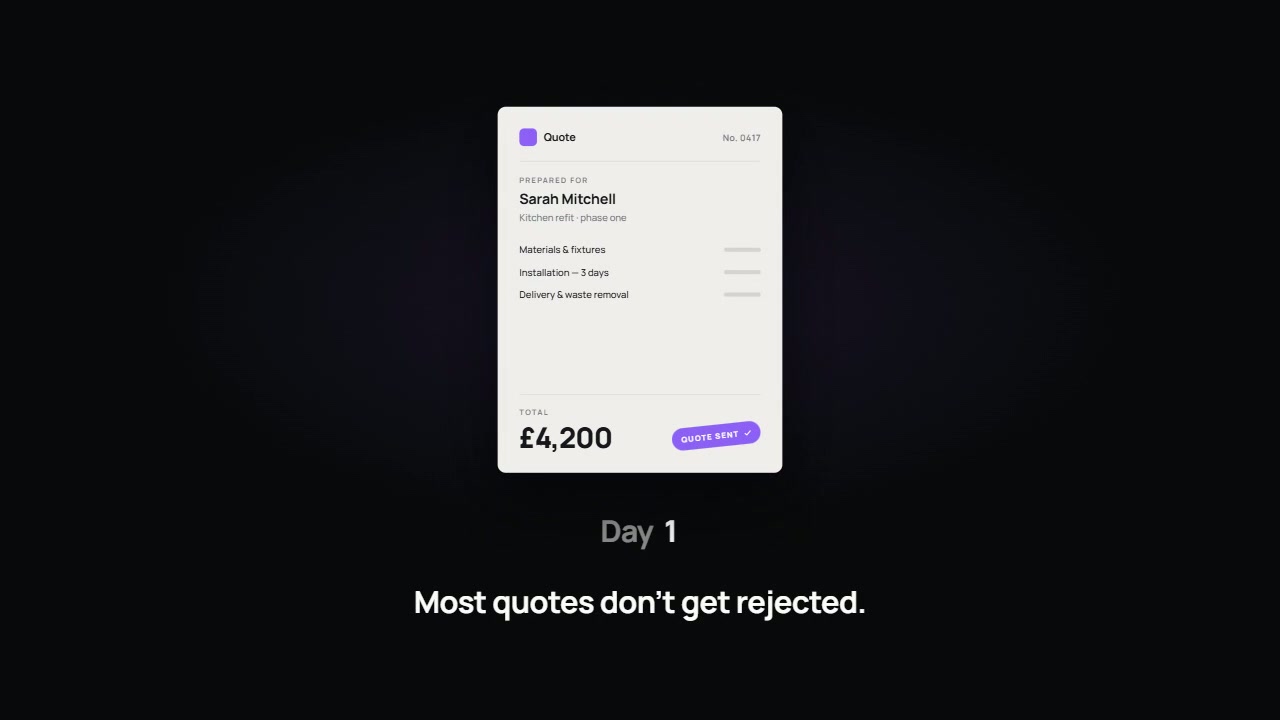
Leave room for a decision. A check a few days after sending, another a week or two later and a final note about a month on is usually enough. Offer to answer questions, not to discount.
With past customers
Here the rhythm is slow and long. A useful message a few times a year keeps you in mind without wearing out the welcome.
How to tell whether your cadence works
Measure replies and conversations, not opens. Look at which step produces the most answers. If nearly all replies come from the first message, the follow-ups may be adding nothing. If they come mostly from later ones, you were right to keep going.
Read the replies as well as counting them. A run of irritated answers tells you the list is wrong or the gaps are too short, whatever the reply rate says.
Common mistakes
- Giving up after one message.
- Repeating the first message word for word.
- Following up daily, which reads as pressure.
- Carrying on after someone has said no.
- Letting the sequence run after a reply, so the person gets an automatic chaser mid-conversation.
- Measuring opens instead of replies and conversations.
Common questions
How many follow-ups is too many?
If each one adds something and they are spaced over weeks, four or five contacts is reasonable for business outreach. If you have nothing new to say, you have already sent too many.
Should follow-ups be in the same email thread?
Usually the first one should, so the reader has the context. A later message can start a fresh thread with a new subject if it brings a new idea.
Is it better to phone?
For some buyers, yes. A short call after an email often gets a faster answer than another email. Be brief, say why you are calling and accept a no gracefully.
What should the closing note say?
That you will not keep writing, that the offer stands and how to reach you if things change. Two or three sentences is enough.
What to do next
Write your cadence down: the number of contacts, the gaps, the channel and what each message adds. Then decide your stopping rules before the first message goes.
Outreach works best when the website it points to is convincing. Ask for our free 24-hour audit and a founder records a personal video walkthrough of your website within 24 hours. No call is needed.
Want this applied to your website?
George or Nicholas will record a personal walkthrough of your site within 24 hours.
Not ready for an audit? See Outbound and growth.