
The short answer
Marketing ROI (return on investment) is one sum: what the marketing brought in, minus what it cost, divided by what it cost. As an example, say you spend £1,000 and win two jobs worth £4,000 in total. That is £3,000 gained on £1,000 spent, or three pounds gained for every pound spent.
The arithmetic is rarely the problem. The problem is knowing which customers came from which marketing. We set this up for clients through our tracking and analytics service, so this comes from doing the work.
The sum in one line
Return minus cost, divided by cost. Some people multiply the answer by a hundred and quote it as a percentage. The meaning is the same. What changes the answer is what you choose to count on each side, which the next sections cover.
The same sum works for all your marketing together or for one channel at a time. Search is the slowest channel to judge, so we cover how to measure SEO ROI on its own.
Why you need the source of every customer
One ROI figure for all your marketing hides more than it shows. A single channel may be carrying the rest. To see that, every enquiry needs a source recorded against it (a Google search, a paid ad, a referral, a leaflet, a returning customer), and the source has to stay attached when the enquiry becomes a quote and then a sale.
Website tracking can capture some of this for you. The rest comes from asking people how they found you. Deciding which marketing deserves the credit is a subject of its own, and our guide, marketing attribution explained, sets out the options.
For each customer, record five things:
- The date of the first enquiry.
- The source, chosen from a short fixed list.
- Whether a quote was sent, and its value.
- Whether the work was won, and the final value.
- The date of the sale.
Once sources are being recorded, the totals can sit on one page that you review each month. We describe what a marketing dashboard should include in a separate guide.
What to count as cost
Count everything you would not have spent if you had done no marketing.
- Agency or freelancer fees.
- Ad spend paid to the platforms, such as Google or Meta.
- Tools and software used for marketing.
- One-off costs such as a new website, photography or video, spread over the period they will be useful for.
- Your own time and your team's time, at a sensible hourly figure.
Owners often leave out their own time. If you spend a day a month writing posts and replying to enquiries, that is a cost, even though no invoice arrives.
What to count as return
Count money from customers won, not leads. A lead is someone who got in touch. A customer is someone who paid. Fifty enquiries that produce no work are worth nothing. Five that produce three good jobs are worth a lot.
Revenue is the simplest figure to use. Gross profit (the sale price minus the direct cost of doing the job) is the more truthful one. Take the earlier example. If the two jobs cost £2,500 to deliver, the gross profit is £1,500, and the marketing made £500 on £1,000 spent. Still positive, but a very different picture.
| Measure of return | Example figure | Gain on £1,000 spent |
|---|---|---|
| Revenue | £4,000 | £3,000, or three pounds per pound spent |
| Gross profit | £1,500 | £500, or fifty pence per pound spent |
These are made-up round numbers to show the method, not typical results. Pick one measure and keep using it, so that months can be compared.
The lag between spending and selling
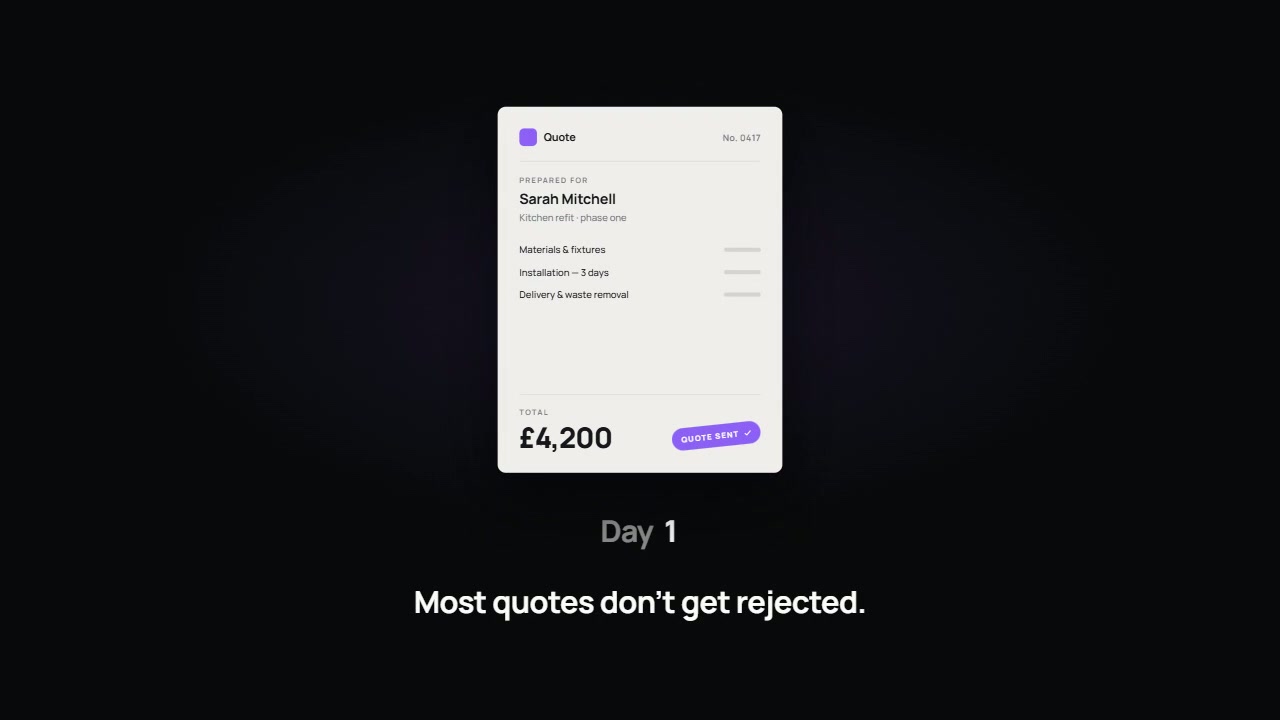
Marketing spend and the sale it produces rarely land in the same month. A kitchen fitter might pay for ads in March, quote in April and be paid in July. Compare March's spend with March's sales and the ads look useless.
The fix is to match each month's spend with the sales that came from that month's enquiries, even if the money arrived later. This is why the date of first enquiry is on the list above. It also means recent months always look worse than they will turn out, so do not judge a channel on its latest month alone.
Lifetime value in plain terms
Lifetime value is what a customer is worth over the whole time they stay with you, not only the first sale. A boiler installation might be followed by years of servicing. An accountancy client may stay for a decade. If you judge marketing on the first invoice alone, you will under-rate the channels that bring customers who come back.
You do not need a formula. Take a typical customer, estimate what they spend in a year and how many years they tend to stay, and keep that figure next to the first-sale figure. Label it as an estimate.
A simple monthly method
A spreadsheet is enough to start. Once a month, on a fixed day:
- List every marketing cost for the month by channel, including time.
- Count enquiries by source.
- Count the customers won from those enquiries, and their value.
- Work out return minus cost, divided by cost, for each channel and overall.
- Go back and update earlier months as slower sales come in.
- Write down one decision: spend more, spend less or change something.
Common mistakes
- Counting leads or clicks as the return.
- Leaving out your own time and one-off costs.
- Comparing this month's spend with this month's sales and ignoring the lag.
- Recording 'website' or 'internet' as the source for everyone.
- Changing what you count from month to month, so no two months compare.
- Stopping a channel after one quiet month.
Common questions
What is a good marketing ROI?
There is no single figure that suits every business, because margins differ. A business with thin margins needs far more revenue per pound spent than one with wide margins. The useful test is whether the gross profit from the customers won is comfortably more than the marketing cost.
Should we use revenue or profit?
Gross profit is the fairer measure, because revenue ignores the cost of doing the work. If you do not know your job costs well enough, start with revenue and say so. Move to gross profit when you can.
What if we cannot tell where a customer came from?
Record it as unknown, not as a guess. A small unknown group is normal. If it is large, the fix is usually to ask every new enquirer how they heard about you and write the answer down at the time.
How long before the numbers mean anything?
Allow a few months of consistent recording, and longer if your sales take a long time to close. One month of data shows very little. The trend over several months is what to act on.
What to do next
Start this month. Agree a short list of sources, add a source column to wherever you log enquiries, and total your marketing costs including time. After a few months you will have a first answer that is rough but real.
If you would like a second pair of eyes, ask for our free 24-hour audit. A founder records a personal video walkthrough of your website within 24 hours, and it can include whether enquiries from the site can be traced back to a source. No call is needed.
Want this applied to your website?
George or Nicholas will record a personal walkthrough of your site within 24 hours.
Not ready for an audit? See Tracking and analytics.