
The short answer
A golf club is several businesses on one site: membership, visitor golf, society and corporate days, functions, and coaching. Each has a different buyer who asks different questions. Marketing works when each one has a clear page, a clear way to enquire and someone who replies.
We build websites and the follow-up systems behind them, so this comes from doing the work. This is an overview. Where we have a fuller guide on a topic, we point to it.
Know your revenue lines
Start by listing where the club's income comes from and who decides in each case. A prospective member, a society organiser and a couple planning a wedding are not looking for the same thing, and one general 'Contact us' form serves none of them well.
| Revenue line | Who decides | What they need to see |
|---|---|---|
| Membership | A golfer, often local, sometimes a family | Categories, costs, how to join, a trial or visit |
| Visitor green fees | A casual golfer or small group | Prices, tee time booking, course photographs, dress code |
| Societies and corporate days | An organiser booking for a group | Packages, dates, catering, a named contact |
| Functions | A couple, a family or a local business | Rooms, capacity, menus, photographs, availability |
| Academy and coaching | A beginner, a junior's parent or an improver | Coaches, lesson types, how to book |
Membership is usually the largest line and the slowest decision. Our guide to increasing golf club membership covers trial offers, categories and follow-up in detail.
Society and corporate days fill quieter weekdays and introduce new golfers to the course. Our guide to society bookings covers packages, organisers and repeat visits.
Functions and coaching are often under-marketed. Each needs its own page, photographs and a named person to contact, because their buyers may never have set foot on a golf course.
Make the website the hub
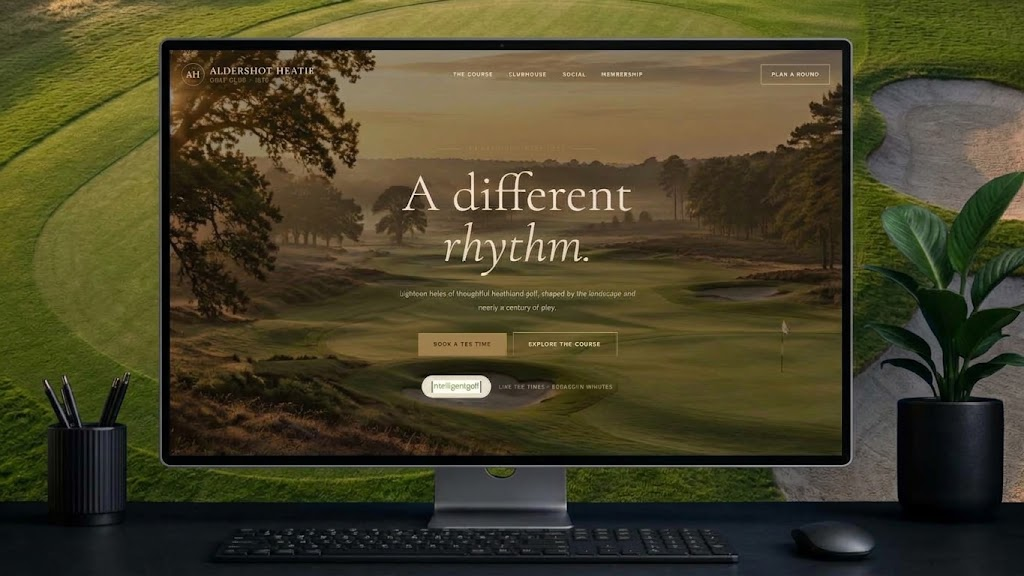
Every other channel sends people to the website, so it has to work for all five audiences. The best golf club websites give each revenue line its own section with its own enquiry route, and stop member notices crowding out the visitor.
- A homepage that shows the course and offers clear routes for members, visitors, societies and functions.
- Prices on the page, or a plain explanation of how pricing works.
- Online tee time booking for visitors, if your booking system allows it.
- A separate enquiry form for each line, sent to the right person.
- Recent photographs of the course, the clubhouse and the people.
- Pages that work well on a phone, where many visitors will first see them.
We have separate guides on what a club website costs and on getting the committee on board with a new one, so we will not repeat them here.
Be found locally
Golf searches tend to be local: courses near a town, a driving range nearby, a wedding venue in the county. The club's Google Business Profile (the free listing shown in Google Search and Maps) needs correct opening hours, categories and photographs, and replies to the reviews people leave. The website needs pages that name the places you serve and the things people search for, such as visitor golf, society days and lessons.
If yours is a golf club not showing up on Google for searches it should appear in, our separate guide goes through the usual causes and what to fix first.
Email members and past visitors
Email is the cheapest channel a club has and often the least used. You already hold details for members, and you can collect them from visitors, society organisers and function clients when they book.
- Members: fixtures, course news, social events and guest offers they can pass on.
- Past visitors: an invitation to return, with a reason and a date.
- Society organisers: next season's dates and packages, sent before they start planning.
- Lapsed members and trial golfers: a simple route back.
Marketing emails to individuals are covered by UK rules on electronic marketing and data protection. In general you need consent or an existing customer relationship, and every email must offer an easy way to unsubscribe. Check your own position before you send, particularly with old lists.
Show the course and the welcome on social media
Social media rarely sells a membership by itself. What it does is show what the club is like: the condition of the course this week, the people behind the bar, juniors on a Saturday morning, a society enjoying its day. That reassures anyone who is nervous about walking into a club for the first time.
Post little and often. A photograph from the greenkeeper, a short welcome from the professional and a result from a club competition do more than a designed graphic. Reply to comments and messages promptly, because some people will enquire there instead of using the website. Ask before you post identifiable photographs of members and guests, and take particular care with juniors.
Plan for the quieter months
Winter and midweek are when marketing earns its keep. Plan them in advance instead of discounting at the last minute.
- Winter packages for societies and visitors, with food included.
- Coaching, club fitting and indoor practice, if the club has the facilities.
- Functions: Christmas parties, wakes, meetings and private dining.
- Membership offers timed for when golfers review their subscriptions.
- A spring campaign prepared over the winter, ready before the season starts.
Work with the committee and track enquiries
Working with the committee
Committees change, and marketing suffers when each new captain starts again. Agree a simple annual plan with a budget, a named person responsible and a short report at each meeting. Bring numbers, not opinions. A committee that can see enquiries by type is much easier to persuade.
Tracking enquiries by type
Record every enquiry under its revenue line, with where it came from and what happened. A shared spreadsheet is enough to begin with. Separate forms on the website make this far easier, and a tool such as GA4 (Google's free analytics product) can show which pages people visited before they enquired.
Common mistakes
- One contact form for members, visitors, societies and weddings.
- A homepage written for existing members, with nothing for a newcomer.
- Hiding green fees and society prices.
- Old photographs that no longer show the course at its best.
- Enquiries going to an inbox nobody checks at weekends.
- Starting from scratch each time the committee changes.
Common questions
Where should a club start?
With enquiries. Find out how many came in last month, by type, and how quickly each was answered. That usually shows the first thing to fix before any money is spent.
Who should run the marketing?
One named person, whether that is the manager, a member of staff or an outside studio. Volunteers can help with photographs and news, but someone has to own the plan and the replies.
Do we need to be on every social platform?
No. Pick the one or two where your members and local golfers already are, and keep them current. A neglected account does more harm than no account.
How much should a club budget?
It depends on the club's size and what needs fixing. As a guide to our own prices, websites start from £2,500 for a small, focused site and most projects cost more, priced on scope and agreed in writing before work starts.
What to do next
List your revenue lines, count last month's enquiries for each and check how each one was handled. Then look at the website as a visitor, a society organiser and a prospective member would.
If you would like help with that, ask for a free 24-hour audit. A founder records a personal video walkthrough of your club's website within 24 hours, covering what each kind of visitor would find. No call is needed, and a 15-minute call is optional.
Want this applied to your website?
George or Nicholas will record a personal walkthrough of your site within 24 hours.
Not ready for an audit? See Websites and systems for golf clubs.